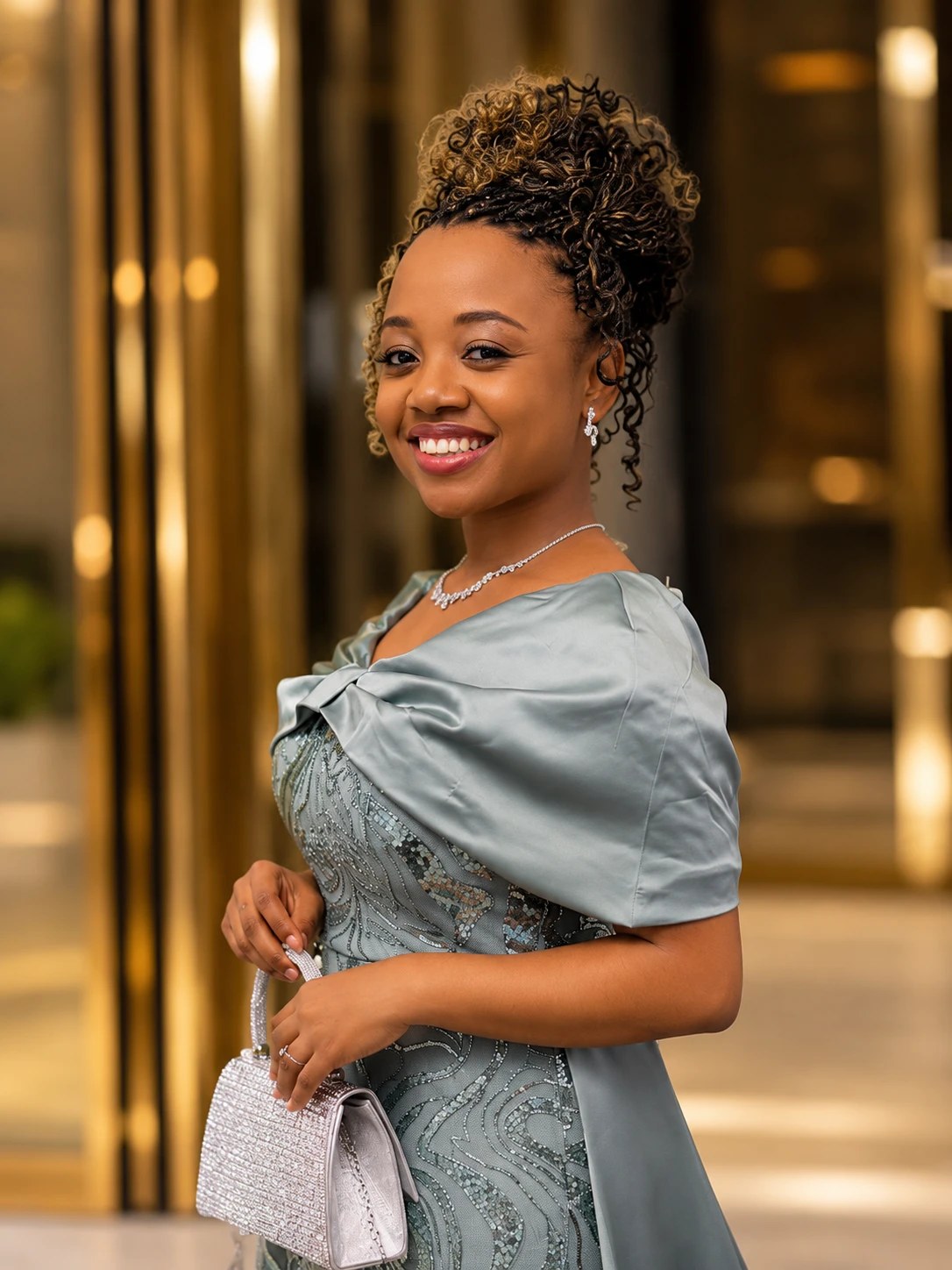
Sagelle Couture was founded by Sagel Julia Kundieko, out of her passion for expression. She believes that people should express who they are through what they wear — and that the clothes we wear to our biggest moments should carry the same weight as the moments themselves.
We pair the boldness of African wax print with the finish of couture, and make every piece to order — for the person who wears it and the people they stand beside.
A History Written in Cloth
From Kuba Raffia to the Liputa
In the Congo, cloth has always carried meaning — and elegance has always been a way of life. Sagelle Couture is made in that tradition.
Long before
Cloth as language
In the Kuba Kingdom of the Kasai, raffia palm fibre was woven, dyed and embroidered into cloth so prized it was worn at ceremonies, given as wealth and kept for generations. Across the Congo basin, bark cloth and raffia spoke of rank, family and occasion.
The 1800s
The wax print arrives
European manufacturers, most famously in the Netherlands, began machine-printing cloth that imitated Javanese batik, using wax to resist the dye. The cloth found its true home on the African coast, travelling inland along the trade routes to the Congo, where it was embraced for its colour and boldness.
The 20th century
The liputa
In Lingala, a length of wax-print cloth is a liputa. In the markets of Kinshasa and Brazzaville, women traders chose the prints, gave them names and passed on their stories. Wrapped, tied or tailored, the liputa became the cloth of church, weddings and family gatherings.
The 1960s
Independence and pride
With independence in 1960, cloth became a statement of identity. Congolese families dressed in liputa for every milestone, and matching prints showed who stood together at a celebration.
Always
La Sape — the art of elegance
From Brazzaville to Kinshasa, the sapeurs of La Sape turned dressing well into an art form — proof that how we dress is how we honour ourselves, our families and the moment.
Today
Couture from the continent
A new generation of African designers has carried the liputa from the market stall to the runway, pairing wax print with satin, tailoring and couture technique — and wearing it, unapologetically, on the world's biggest stages.
2026
Sagelle Couture
Founded by Sagel Julia Kundieko, our house takes its place in that story — continuing the conversation between cloth and celebration, one made-to-order piece at a time.
“Kolata bilamba ya kitoko.”
In Lingala, to wear beautiful clothes is to honour the moment and the people in it. If you are planning a celebration, we would love to dress you — and the people standing beside you.